Transitioning Your Cat to a Safe-at-Home Lifestyle
Keeping your cat safe at home is one of the most effective ways to protect their health, safety, and overall wellbeing. A “safe-at-home” lifestyle means preventing your cat from roaming freely while still meeting all their needs within a secure environment: this means meeting their physical and behavioural needs while keeping them entirely indoors or while providing them with safe outdoor access through the use of limited enrichment spaces like a catio or enclosed yard.
There are significant benefits to getting your cat used to the safe-at-home lifestyle. Cats kept safe at home live, on average, up to 10 years longer than cats allowed to roam. This is because roaming cats regularly face risks to their physical wellbeing, from road accidents and dog attacks to disease, getting lost, or fights with other cats. In fact, 2 in 3 cat owners have reported losing a cat to a roaming-related incident.
The idea of keeping your cat at home can feel like a big change, especially if your cat is used to going outside. But, with the right planning, setup, and patience, most cats can successfully adopt a safe-at-home lifestyle and go on to live happy, enriched lives.
Understanding What Your Cat Needs
Just like us, cats need more than the basics to feel safe and content. They need spaces where they can rest undisturbed, opportunities to play and explore, and the ability to express their natural behaviours. Before making the transition, it’s important to ensure your home environment is set up to meet these needs.
A well-prepared home allows your cat to eat, rest, toilet, play, scratch, and observe their surroundings in ways that feel natural to them. This might involve placing multiple food and water stations away from litter trays, quiet and clean toileting areas, and a mix of cosy hiding spots and elevated resting places where your feline friend can feel secure. Cats are natural climbers, so providing access to vertical spaces, like shelves, window perches, or the tops of furniture, can greatly impact how they experience their environment.
Equally important to the safe-at-home lifestyle is the element of choice. Offering your cat more than one place to sleep, eat, or decompress will allow them to move freely through their environment and feel in control. A stimulating sensory environment including things to see, smell, hear, and touch, will help prevent boredom and keep your cat mentally engaged.

Creating Safe Outdoor Experiences
Safe-at-home living doesn’t have to mean your cat never experiences the outdoors. In fact, many cats benefit from safe outdoor access, where they can enjoy fresh air and natural stimulation without the risks of roaming.
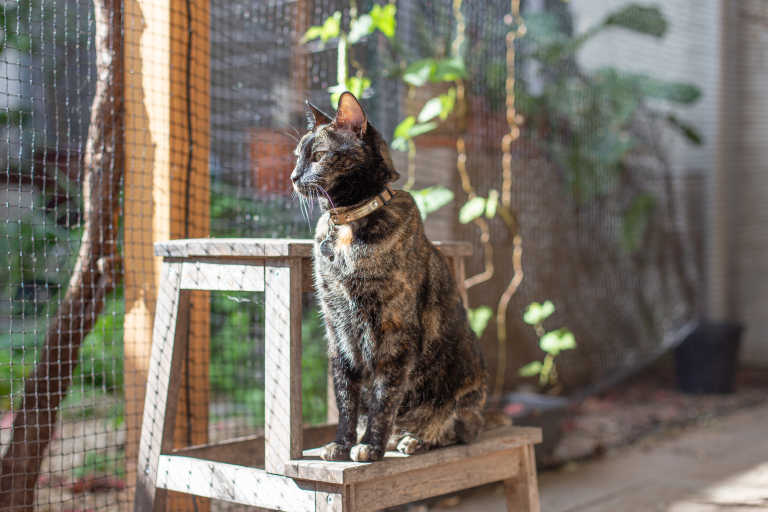
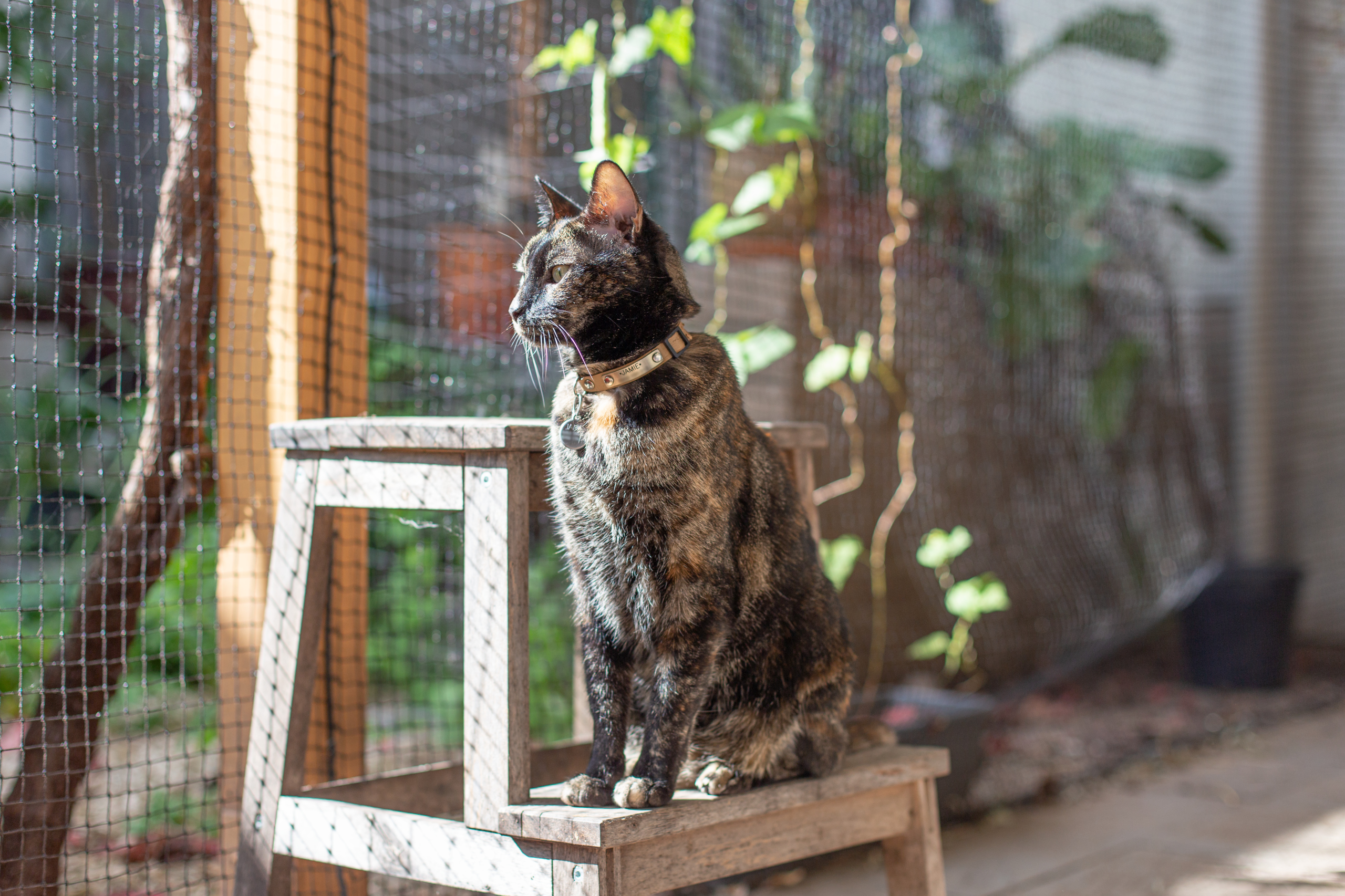
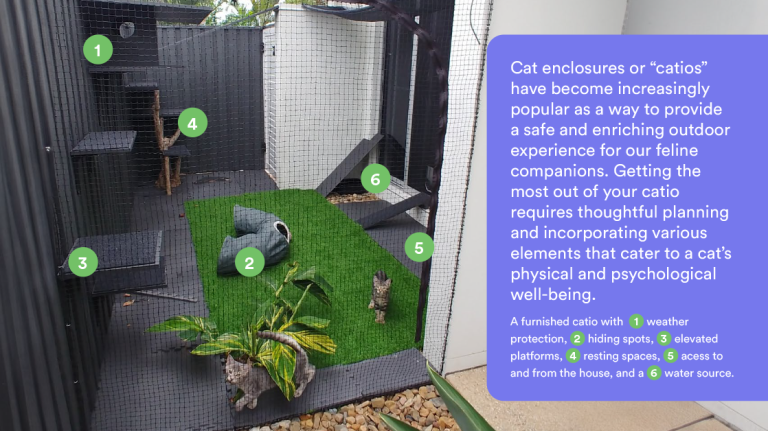
Cat enclosures, or “catios,” are one of the most popular options. These spaces can be as simple or elaborate as your home allows, but the most successful designs include a mix of shaded areas, elevated platforms, hiding spots, and comfortable resting places. Ideally, the enclosure is connected directly to the house, allowing your cat to move freely in and out of doors, giving them choice and control over how they interact with their environment.
Other options include escape-proof fencing, which allows your cat to safely explore a backyard, or supervised outdoor time. Some cats may even enjoy harness training, though this should always be introduced gradually and in a way that feels positive and safe for the individual cat.
No matter the setup, the goal is the same, to give your cat access to outdoor experiences while ensuring they can always return to a secure, familiar space.
Making the Transition
Transitioning your cat to a safe-at-home lifestyle takes time, meaning gradual adjustments to their lifestyle will give you the best chance of success. Cats rely heavily on routine, so sudden changes can feel overwhelming. Instead, easing them into the new lifestyle helps reduce frustration and build confidence.
A common starting point is keeping your cat indoors at night, then slowly increasing the amount of time they spend at home. Pairing this with a consistent daily routine, such as regular feeding times, play sessions, and quiet periods, can help your cat feel more secure as they adjust.
Timing can also work in your favour. Moving house, for example, provides a natural opportunity to establish new routines in a new environment. Similarly, colder weather often encourages cats to seek out warm, comfortable indoor spaces, making the transition to indoor living feel more natural.
It’s important to remember that this process can take several weeks, or even longer for some cats. Patience and consistency are key.
Keeping Your Cat Happy and Engaged
One of the biggest concerns when getting your cat used to staying at home is whether they’ll become bored with indoor living. In reality, boredom is much more about the environment than the location. When a cat’s needs are met, they can easily enjoy a full and stimulating life at home.
Play is a particularly important part of this. Cats are natural hunters, and providing opportunities to stalk, chase, and pounce helps fulfil this instinct. Short, frequent play sessions throughout the day are often more effective than long ones, and rotating toys can help keep things interesting.
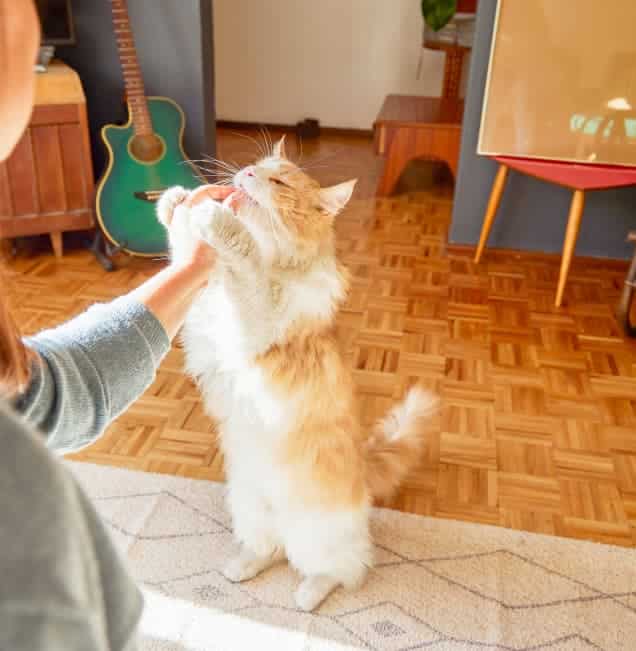
Beyond play, enrichment can come from everyday elements of your home. Watching the world through a secure window, exploring different textures, or engaging with puzzle feeders can all add variety to your cat’s day. Gentle, positive interaction with people is also important, but this should always be done on your cat’s terms. Letting your cat initiate contact and choose how long interactions last helps build trust and ensures they feel safe.
Supporting Your Cat Through the Change
Every cat will respond to this transition differently. While many adapt quickly, others may need more time and support. Paying attention to your cat’s behaviour can help you understand how they’re coping.
If your cat seems withdrawn, is eating less, or shows changes in toileting habits, it may be a sign they’re feeling stressed. In these cases, small adjustments to their environment or routine can make a big difference. If concerns persist, seeking advice from a veterinarian or qualified behaviour consultant can help guide you through the next steps.
Cat owners who have transitioned their adult cats to a safe-at-home lifestyle will often remark that the process can be challenging and takes planning, patience, and time. It’s important to remember that this change won’t happen overnight, and it’s completely normal for progress to be slow or even go backwards at times. Using the information in this blog and our other available resources can help support a smoother transition, but the most important thing is to remain patient and understanding. Remember, you and your cat are on the same team, working towards a safer and happier life at home.
A Safer, Happier Future at Home
More than half of cats in NSW already enjoy a safe-at-home lifestyle, and many cat carers have successfully helped their companions through the transition. While it may take a little time and preparation, the long-term benefits are undeniable.
By keeping your cat safe at home, you’re protecting them from harm, supporting their wellbeing, and giving them the opportunity to live a longer, healthier life, all while creating an environment in which they can truly thrive.