
Being prepared helps you and your animals stay safe in an emergency!
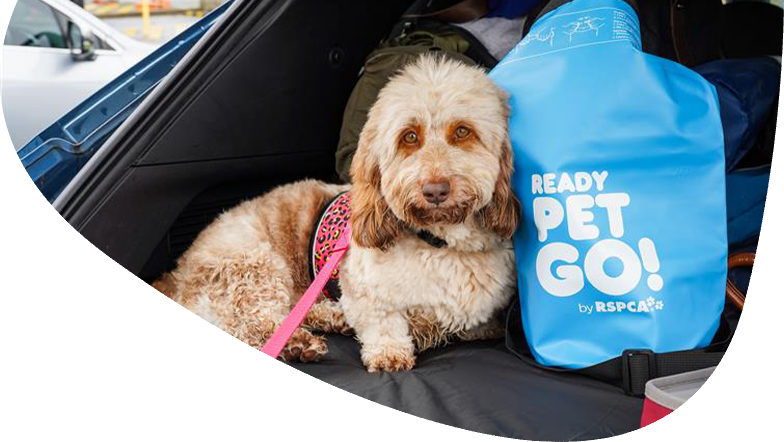
NSW’s diverse landscape means communities often face extreme weather events – heatwaves, drought, bushfires, storms, and floods. As guardians of animals, it’s our shared responsibility to keep them safe.
RSPCA NSW supports the community in many ways during emergencies, and we strongly encourage all animal owners to prepare an emergency plan but also take preventive measures on their properties to minimise risk and protect lives.
Planning ahead is a vital part of emergency preparedness and can significantly improve the chances of safely evacuating your animals during events like bushfires or floods.
RSPCA NSW’s Ready Pet Go Emergency Pack includes a step-by-step guide to help you prepare a plan for your animals.
Find out how to protect your animals and learn more about the work RSPCA NSW does during emergencies.
Register for your Ready Pet Go Emergency Pack by completing the form below. Each Ready Pet Go pack contains:
*Please note packs are limited to one per NSW household only and a form below must be submitted in order to receive your pack.

"*" indicates required fields

At RSPCA NSW, we know that, like all other family members, our animal companions must be cared for and protected during emergency situations. Emergency preparedness greatly increases the likelihood of safely evacuating animals during emergencies without delay.
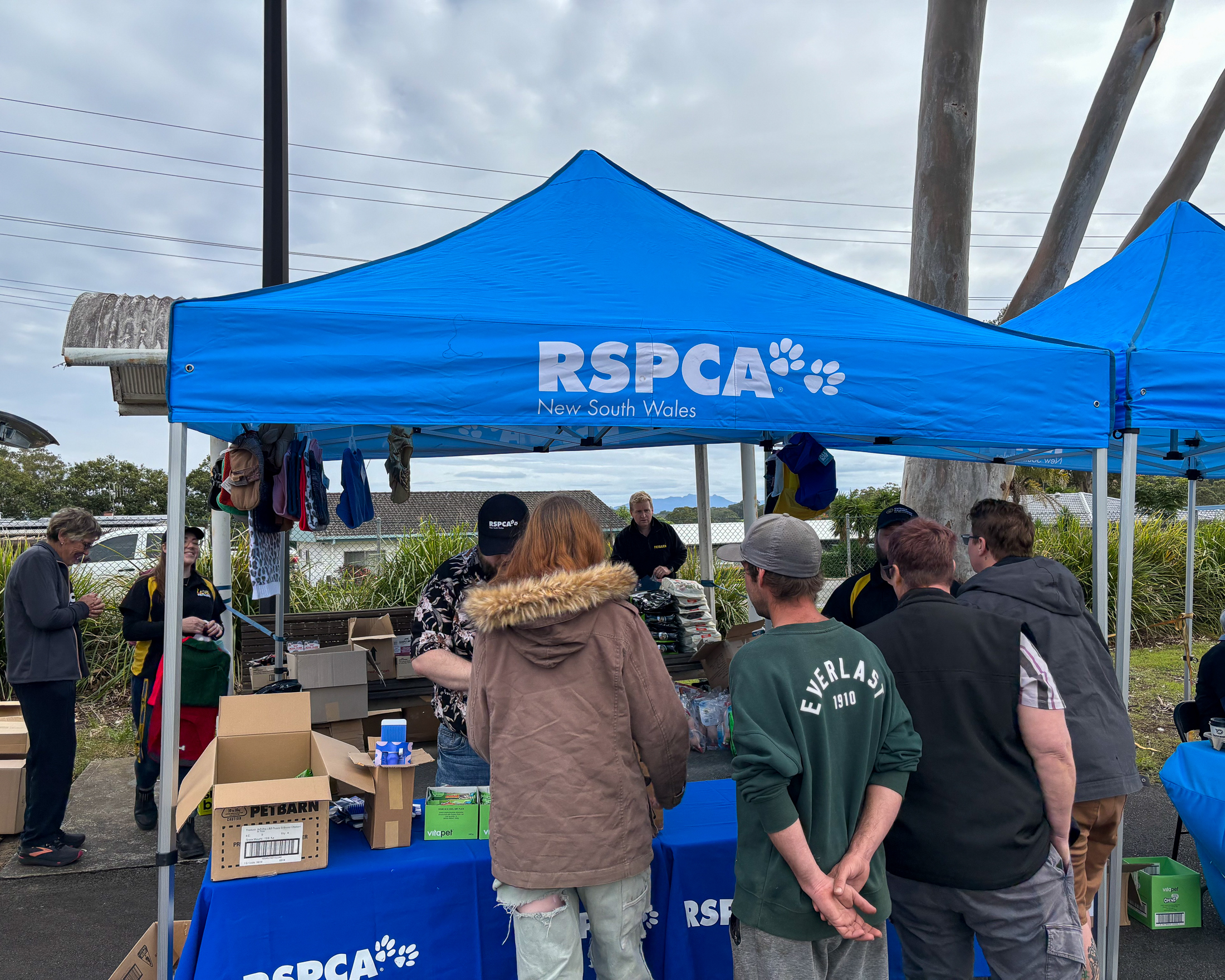
RSPCA NSW works closely with NSW Emergency Services and is committed to improving public education on animal safety during emergencies through ongoing collaboration.

During and after an emergency, animals can become stressed, frightened, and disoriented, just like humans. Familiar scents and landmarks may have been damaged or destroyed. Handle your animals with extra care using low-stress methods during these times.

By giving animals the gift of love, you will help rescue, rehabilitate, and rehome vulnerable animals across NSW. No matter how small your contribution, your donation will help ensure they are protected from cruelty and neglect.
During floods, fire-related crisis, and other emergency situations, always check for updates from emergency services and traffic-monitoring apps to ensure it’s safe to travel with your animal companions. Don’t wait until the last minute to act—early preparation can save lives. If evacuation orders are given, follow them immediately.
Download the Hazards Near Me App which will include the latest warnings and information for impacted communities.
Other community services for important updates are:
NSW State Emergency Services (NSW SES)
Prepare an emergency kit for your animals
Just like you would pack an emergency kit for yourself, your animals need one too. Make sure it includes:
Advice for livestock owners
When creating your emergency plan, you should include how to transport all your animals if needed. Ensure you have suitable yards, loading facilities, and vehicles ready. If you need to move many animals, it’s helpful to build a network of neighbours, other livestock owners, and transport providers who can assist during emergencies. Having strong community ties is important.
When evacuating livestock, never risk the safety of yourself, others, or the animals. Avoid transporting them during active emergencies or in high-risk situations.
For livestock owners, it’s crucial to identify large animal evacuation centres in your area, typically located at showgrounds. If you’re unfamiliar with these sites, consider visiting them beforehand to familiarise yourself with the entrance and exit points, grounds, and facilities. Knowing the layout can make accessing these centres during an emergency much less stressful.
If livestock are staying on the property, ensure they have shelter with enough space for each animal and appropriate shelter from extreme weather. Attach ID tags with a contact number securely to the mane of horses or other livestock. These tags should be prepared in advance and kept in the emergency kit.
Plan your evacuation route
Identify where you can safely evacuate with your animals before Tropical Cyclone Alfred arrives. Evacuation information is starting to become available through NSW SES channels. Familiarise yourself with the evacuation centres located near you and ensure they are pet friendly. If you have larger animals, like horses or livestock, ensure you have a transport plan and know where they can be safely relocated.
Secure your property for animals staying at home
If evacuation isn’t possible, make sure your animals have the best chance of survival:
Good animal etiquette at Evacuation Centres
Who do I contact when I lose or find a pet, wildlife or need assistance with livestock?
During floods and heavy rainfall, animals may become displaced or lost when homes, sheds and fences are damaged or destroyed. Lost animals should be returned to their home property or correct ownership as soon as possible and appropriate care and treatment for any disease or injury provided.
The Ready Pet Go Emergency Pack is designed to help pet owners prepare their animals for emergencies such as floods, bushfires, severe storms, or heatwaves. It includes tools and information to help keep your pets safe before, during, and after an emergency.
To help you prepare your companion animal for an emergency, each pack includes the following essential items:
The Ready Pet Go pack is a starter kit designed to help you begin your full emergency plan. You can further personalise your pack by adding your pet’s medication, important paperwork, or other essentials.
Our amazing volunteers prepare and send Ready Pet Go packs each week. We always aim to deliver them as quickly as possible, but due to high demand, please allow up to two weeks for delivery.
At this stage, we’re limiting packs to one per household to ensure that we can provide emergency kits to as many pet guardians as possible. However, you can use the checklist included in the pack to create additional kits for your other pets.
While our Ready Pet Go packs are primarily designed for cats and dogs, the same emergency preparedness principles apply to all animals. For livestock and small pets, you can use our checklist as a guide to create a more personalised kit that meets their specific needs.
Your plan should include:
If it’s been more than three weeks since you placed your order, please email ert@rspcansw.org.au with your name and delivery details so we can ensure that you receive your kit.
Yes! We’re continually restocking and distributing packs throughout the year. Keep an eye on the RSPCA NSW website and social media channels for updates.
Make sure your pet is microchipped and your pet registry details are up to date. Identify safe places you can take your pet in advance, prepare transport options, and keep suitable carriers ready in case you need to take them with you when an emergency arises. Practice travelling with your pet to help them feel more comfortable, and share your plan with any family members, friends, and neighbours who might be able to help you move your animals during an emergency.
The Ready Pet Go pack is free for NSW pet owners as part of our community emergency preparedness program. However, each pack costs around $15 to produce. If you’re able, we encourage you to make a donation to either help cover costs or pay it forward to support another pet guardian who may not be able to afford an emergency preparedness pack of their own.
Yes, RSPCA NSW offers training in basic animal first aid. For more information or to enrol, visit RSPCA NSW Training Courses – Provide Basic Animal First Aid.
As a charity, we rely on the generosity of our donors and supporters to assist the thousands of animals who turn to our shelters and vet hospitals for help. No matter the size of your contribution, your donation can make a real difference for animals in crisis.
Alternatively, if you’re passionate about helping animals and enjoy meeting like-minded people, RSPCA NSW’s Emergency Response Team (ERT) is always looking for passionate people to join. Comprised mostly of volunteers, the ERT provides comfort, health checks, and emergency care to communities and animals affected by floods, bushfires, and other events across NSW.
To learn more or apply, visit www.rspcansw.org.au/volunteer/volunteer-opportunities/emergency-response/
Visit rspcansw.org.au/emergency-preparedness for more information, tips, and resources to help keep your animals safe before, during, and after an emergency.
Yes! A digital version of the emergency planning checklist and other helpful tools is available. Please email ert@rspcansw.org.au if you’d like a copy sent to you.
Having an emergency kit prepared will greatly increase the likelihood of safely evacuating your animals during crisis situations. Your emergency kit should include any items that will help you transport and care for your animal should the need to evacuate arise. This includes:
Evacuation can present some unique challenges for larger animals. That’s why, when preparing an emergency kit for evacuating horses and livestock animal, it’s important to be more mindful of the specialised care and transportation your animal companions will require during the evacuation process. Your horse and livestock animal emergency kit should include:
During emergency situations, access to veterinary care may be severely limited. That’s why preparing an animal first aid kit to accompany your evacuation kit is essential to ensuring you’re ready for any injuries or health emergencies that may arise.
Please note that horses and livestock animals may require additional items to be adequately treated in emergency situations. Remember to prepare any necessary supplies for large and farm animal care when preparing a first aid kit for your equine and livestock animal companions. This includes:
As a rule, avoid letting your pet drink floodwater, as it may contain harmful bacteria, parasites, chemicals, and toxins. During emergencies, only give your pets boiled or bottled water. If your pet has been exposed to floodwater or contaminated water, contact a veterinarian and observe the following steps:
To ensure your animals are ready to be transported in emergency situations, make sure that you’ve adequately prepared both your animal companions and travelling equipment. Regularly inspect your float or trailer to ensure they are in safe working order. Additionally, you may also practice travelling with your animals, including short trips to help them get comfortable with being with you on the road. Routinely practice loading and unloading your animals to reduce stress and build familiarity with the procedure. For livestock animals, regularly move them in and out of safe areas to help them become accustomed to the route and environment.
There may be multiple ways to evacuate both yourself and your animals during an emergency. It’s important to identify these options beforehand and develop both a primary evacuation plan and some backup options, along with a Ready Pet Go Emergency Pack. Your preferred location might become unavailable due to factors like weather conditions, road closures, or availability of family and friends.
When arriving at an evacuation centre, make sure you inform evacuation centre staff of your animals’ arrival, especially if they are not fully vaccinated. Remember to ensure your animals have proper identification (e.g., a registered microchip) when developing your evacuation plans and emergency kit. Whenever possible, maintain your animal’s regular feeding routine to minimise stress and prevent digestive issues. However, avoid sharing water sources between your horses, livestock, and other animals to reduce the risk of illness within the evacuation centre.
Your ideal destination will depend on where you live and the type of animals you have. Regardless of your preference, it’s important to research destinations ahead of time to ensure you are accounting for the needs of your companion animals. For example, anyone evacuating with horses and livestock animals will need to have identified evacuation sites that can accommodate large animals or groups of animals. Some relocation sites include:
If you must leave your animals behind, ensure they’re free to find food and safety without your supervision. Follow these steps to prepare your animals if you need to leave them behind:
It’s easy to feel helpless when trying to assist native wildlife animals during floods or fires, but there are many steps you can take – both in your backyard and local community – to support wildlife animals during emergency situations. If you find sick or injured wildlife animals during emergency events, please contact your local wildlife organisation for urgent assistance.
You can also make a difference for native animals outside of emergency events by creating safe and thriving ecosystems for wildlife to enjoy.
By taking certain precautionary measures before extreme weather events, you can better prepare your home for emergency situations.
If you’re a drought-affected farmer who needs help caring for your animals, please contact the Department of Primary Industries and Regional Development for support.
RSPCA NSW attend many jobs involving drought-affected stock across the state. Our Inspectors will typically attend with the assistance of a veterinarian from Local Land Services NSW (LLS) who can assess the stock and determine the best course of action.
RSPCA NSW works closely with farmers and support agencies to assist with the preparation of stock management plans, provide advice, and support.
RSPCA NSW can also connect farmers with mental health assistance, sourcing feed, assisting in destocking, and working on stock welfare panels. A Stock Welfare Panel made up of representatives from RSPCA NSW, the Department of Primary Industries and Regional Development, Local Land Services, and the farmers themselves with the aim of determining the best course of action for particular stock and providing the necessary support and guidance.
If you find an injured animal, please call RSPCA NSW, Animal Welfare League, or the local police station and notify of the animal’s location.
Please see RSPCA NSW’s ‘Lost Pet page here if you need assistance locating your missing pet. We also recommend contacting your local pound, shelters, and veterinary clinic. You can also place a ‘Lost’ notification on the NSW Pet Registry, allowing finders to contact you directly using this page: NSW Pet Registry – Lost and Found
RSPCA NSW recommends consulting the Bureau of Meteorology, Australia’s national weather, climate, and water agency. You can also check with the NSW SES for severe weather and flood information and the NSW Rural Fire Service for information about bushfires. The Hazards Near app provides up-to-date alerts and data about bushfires and floods in NSW. (link to websites and/or apps). Connecting with other people in your specific area using social media can also be helpful.
If you are currently being evacuated and do not have a Pet Emergency Plan, it is important to know that pets should not be abandoned unless it is impossible to safely evacuate them.
When taking your pets with you in the case of evacuation, try to also take as many of the items recommended on our ‘Pet Emergency List’ with you as you can before you leave the property.
If you have to leave pets behind alone, leave them in a safe, secure room. Ideally this room would have no windows but must have adequate air (like a big bathroom). Avoid rooms with hazards such as large windows, hanging plants or large picture frames. Try to remove as many hazards (toxins like cleaning products and some plants, heavy furniture that could injure the animal) as possible from the room before leaving.
If you need further assistance, please contact NSW Emergency Services and they can assist you further and take the appropriate action to keep you and your pets safe.
If you are currently being evacuated and do not have a Pet Emergency Plan, it is important to know that pets should not be abandoned unless it is impossible to safely evacuate them.
When taking your pets with you in the case of evacuation, try to also take as many of the items recommended on our ‘Pet Emergency List’ with you as you can before you leave the property.
If you have to leave pets behind alone, leave them in a safe, secure room. Ideally this room would have no windows but must have adequate air (like a big bathroom). Avoid rooms with hazards such as large windows, hanging plants or large picture frames. Try to remove as many hazards (toxins like cleaning products and some plants, heavy furniture that could injure the animal) as possible from the room before leaving.
If you need further assistance, please contact NSW Emergency Services and they can assist you further and take the appropriate action to keep you and your pets safe.
Feeding wildlife can cause harm by contributing to nutritional imbalances, digestive issues, and/or dependency on humans. It can also lead to spread of disease, behavioural changes, and disruptions to ecosystems. These consequences include malnutrition, altered foraging behaviours, increased vulnerability, and ecosystem imbalance. It’s best to let wildlife find their natural food sources to avoid these risks. If you are concerned about a native animal, please contact your local wildlife rescue organisation.
Some evacuation centres accept pets, but not all. It’s essential to check with local authorities, emergency services, or your local council for pet-friendly shelters before you travel during an emergency. You can also prepare by identifying pet-friendly hotels or boarding facilities outside of danger zones ahead of time as part of your Ready Set Pet Emergency Plan.
) If you see an animal in distress during a bushfire or flood, call 000, contact your NSW State Emergency Service or your Local Land Services Department for assistance.
For wildlife, contact specialised wildlife rescue services like WIRES or other local wildlife rehabilitation groups.
Contact your local wildlife group on the numbers below.
WIRES contact number: 1300 094 737
Sydney Wildlife contact number: (02) 9413 4300
Always ensure your own safety before attempting to assist any animal in distress.
) If you see an animal in distress during a bushfire or flood, call 000, contact your NSW State Emergency Service or your Local Land Services Department for assistance.
For wildlife, contact specialised wildlife rescue services like WIRES or other local wildlife rehabilitation groups.
Contact your local wildlife group on the numbers below.
WIRES contact number: 1300 094 737
Sydney Wildlife contact number: (02) 9413 4300
Always ensure your own safety before attempting to assist any animal in distress.
) If you see an animal in distress during a bushfire or flood, call 000, contact your NSW State Emergency Service or your Local Land Services Department for assistance.
For wildlife, contact specialised wildlife rescue services like WIRES or other local wildlife rehabilitation groups.
Contact your local wildlife group on the numbers below.
WIRES contact number: 1300 094 737
Sydney Wildlife contact number: (02) 9413 4300
Always ensure your own safety before attempting to assist any animal in distress.
) If you see an animal in distress during a bushfire or flood, call 000, contact your NSW State Emergency Service or your Local Land Services Department for assistance.
For wildlife, contact specialised wildlife rescue services like WIRES or other local wildlife rehabilitation groups.
Contact your local wildlife group on the numbers below.
WIRES contact number: 1300 094 737
Sydney Wildlife contact number: (02) 9413 4300
Always ensure your own safety before attempting to assist any animal in distress.
If your pet has been exposed to floodwater or contaminated water:
To keep your pets cool during a heatwave:
Signs of heatstroke in pets include:
To prevent heatstroke:
If you see an animal in distress during a bushfire or flood, call 000, contact your NSW State Emergency Service or your Local Land Services Department for assistance.
For wildlife, contact specialised wildlife rescue services like WIRES or other local wildlife rehabilitation groups.
Contact your local wildlife group on the numbers below.
WIRES contact number: 1300 094 737
Sydney Wildlife contact number: (02) 9413 4300
Always ensure your own safety before attempting to assist any animal in distress.

RSPCA NSW rehomes a range of different animals, from dogs, cats, and birds to horses, rabbits, and sheep! We believe that all creatures, great and small, can bring joy to our families and homes. Begin your adoption journey today and make an adorable lifelong friend!

By providing temporary homes for our animals, we can ensure they get the care they need until they are ready to be adopted. Join our network of foster carers for an incredibly rewarding experience; with your help, we can change the lives of some of the state’s most vulnerable animals.

We rely on our generous supporters to continue assisting the thousands of animals turning to RSPCA NSW for help. No matter how small your contribution, every gift makes a lifesaving difference for animals in need.

By raising funds and lending a hand to communities and their pets, our volunteers play a pivotal role in our work throughout NSW. If you have a genuine concern for animals and enjoy meeting like-minded people, consider becoming an RSPCA NSW volunteer today!