Desexing guinea pigs is a common procedure that helps prevent unexpected babies and makes it easier for guinea pigs to live happily together. Also called neutering or spaying, desexing can reduce territorial behaviour, allow mixed-sex bonding, and support better long–term health when done by a vet experienced with guinea pigs.
Guinea Pigs Are Prolific Breeders
Guinea pigs are “precocial”, which means they are born more mature and independent than baby animals of many other species. As a result, female guinea pigs become fertile from 4 weeks of age. This makes unplanned and unwanted pregnancies common. On top of that, guinea pigs are prolific breeders, typically having 2 to 4 pups per litter up to 5 times per year! And those pups can then go on to have pups of their own, and things can quickly get out of hand. Caring for that many animals is very difficult, which is why it’s recommended that you desex your guinea pigs.
Talk to your vet about the best time to desex your guinea pigs and keep males and females separate until they are desexed.
Top tip: Male guinea pigs may still be able to get an undesexed female pregnant for several weeks after he has been desexed. To avoid unexpected pregnancies, ask your vet how long the male should be separated from any undesexed females at the time he is desexed.
Painful Ovarian Cysts in Female Guinea Pigs
Nearly all (non-desexed) female guinea pigs over 3 years of age will develop ovarian cysts. These cysts can sometimes be very large (several centimetres wide) and cause discomfort by putting pressure on other important structures in the abdomen. These cysts can also cause hair loss and crusting of the teats.
More seriously, ovarian cysts can also be associated with changes in the uterus, which can sometimes turn cancerous.
Boar-butt (impaction) in Male Guinea Pigs
The most common problem seen in male guinea pigs that haven’t been desexed is ‘boar-butt’. This is the accumulation of faeces in the anal vestibule, which causes swelling, discomfort and, sometimes, urinary tract infections. If you suspect that your guinea pig is experiencing any reproductive issues like ovarian cysts or boar-butt, contact your local vet for support.
Preventing Common Health Problems in Guinea Pigs
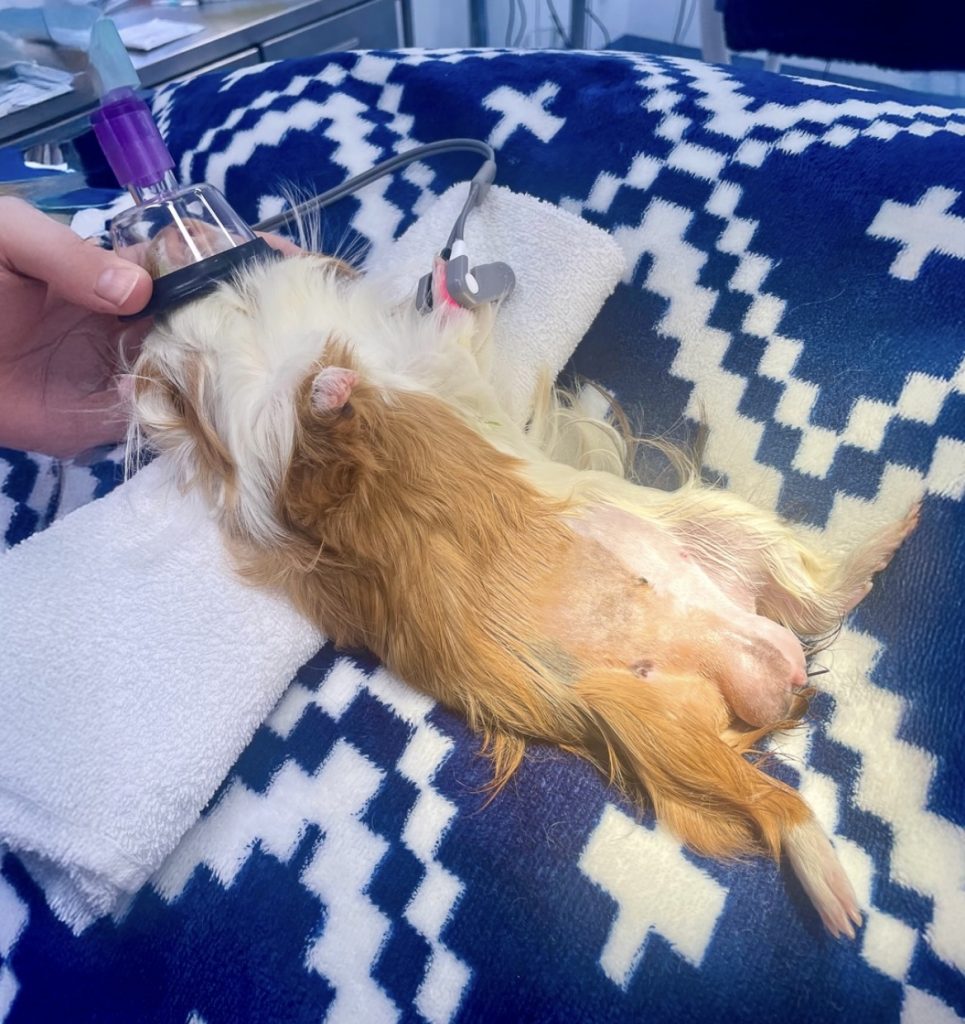
The good news is that that most of these problems can be prevented by having your guinea pigs desexed by an experienced veterinarian! Desexing guinea pigs is not as straightforward as it is in dogs and cats. Make sure you find a vet that is experienced with this species.
Some people decide they will keep only same-sex guinea pigs to avoid unwanted pregnancies i.e., they keep only males or only females. This is great in theory, but this very commonly leads to problems when pet owners have trouble distinguishing between male and female guinea pigs. It can be tough to tell the difference, especially when guinea pigs are young. This approach creates a high risk of unwanted pregnancies. Furthermore, this approach does not prevent longer term health problems that occur in undesexed guinea pigs, such as ovarian cysts and ‘boar butt’.
By having your guinea pigs desexed by an experienced veterinarian, you will eliminate the risk of unwanted litters and help keep your guinea pigs healthy for longer. If you do suspect that your guinea pig is experiencing any issues, please contact your local vet immediately.
For more information visit the RSPCA Knowledgebase