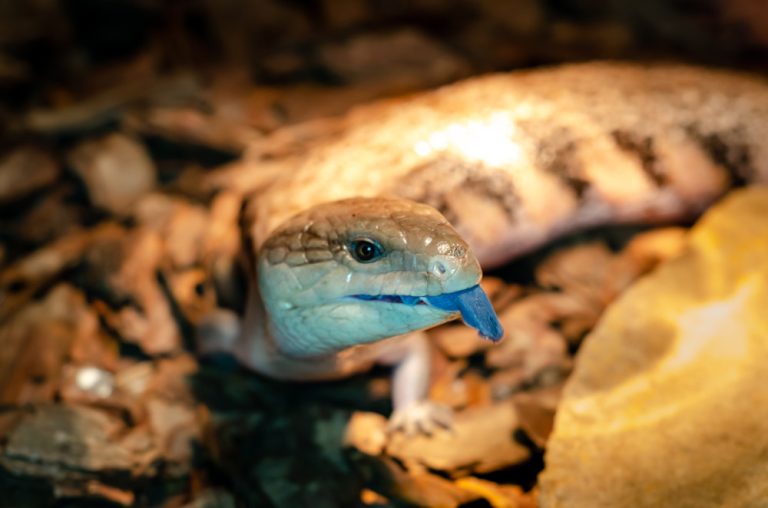
With the warmer weather returning, RSPCA NSW has received an increase in calls from concerned residents about blue-tongue lizards appearing in backyards, gardens, and driveways.
Many fear they are dangerous (one was even recently mistaken for a baby crocodile!), lost or injured — but in most cases, these charming reptiles are doing just fine. In fact, having a blue-tongue in your yard is an honour, and great for the garden!
So why are there suddenly more blue-tongues around?
Blue-tongues are emerging from brumation, the reptile equivalent of hibernation, to bask in the sun and resume activity.
These reptiles are harmless and are unable to cause harm to humans or your pets. They aren’t venomous and generally only open their mouth, hiss, or bluff if they feel threatened. To avoid them having a nibble on your fingers, leave them alone (unless they are in imminent danger).
Leave them be
If a blue-tongue feels safe in your backyard, allow them to stay! They are beneficial to your garden, as they help control garden pests such as snails, caterpillars, and insects.
Blue-tongue lizards don’t hatch from eggs and instead, are born live and independent. This means that babies don’t require rescue unless they are clearly injured or in jeopardy.
Blue-tongues have a defined home range. Moving an adult or baby blue-tongue from where you have found them can disorient them and they struggle to find food, water, shelter,. They may also inadvertently be exposed to predators. Moving a blue-tongue could therefore cause death or injury.
Leave blue-tongues alone unless they are injured or at risk of injury from your dog or cat for example.
If you do have to move them, try not to move them too far.
Risks to blue-tongues
Use of snail pellets or pesticide baits can indirectly poison lizards (if they eat contaminated snails), so we encourage residents to avoid these chemicals.
Garden tools such as mowers and whipper snippers can injure or kill blue-tongues, so exercise caution when operating them – especially around the edges of the yard and around rocky nooks and water sources.
As mentioned above, our pet cats or dogs can harm these safe and wonderful lizards.
“If you’re worried about your pet showing interest in a blue-tongue lizard, we recommend supervising their time outdoors, providing potential hiding spots for the lizard or gently encouraging them to a neighbouring spot with similar habitat — but avoid full relocation unless absolutely necessary,” said RSPCA NSW Veterinarian, Kate Drew
“Blue-tongue lizards can often be attracted to the heat of roads so it’s best to leave them in backyards where possible
“Blue-tongue lizards are native to NSW and an important part of the ecosystem.
“Don’t let their distinctive blue tongues scare you, they are harmless and can in fact help your backyards. They help control pests like snails and insects, and in most cases, the best thing people can do is simply leave them be.”
While blue-tongue lizards are great creatures to have in your backyard, it is illegal to take them from the wild and keep them as a pet.
If someone was to find an injured blue-tongue lizard, contact their local wildlife rescue group or veterinarian.
For more information, please visit the RSPCA Knowledgebase at www.kb.rspca.org.au