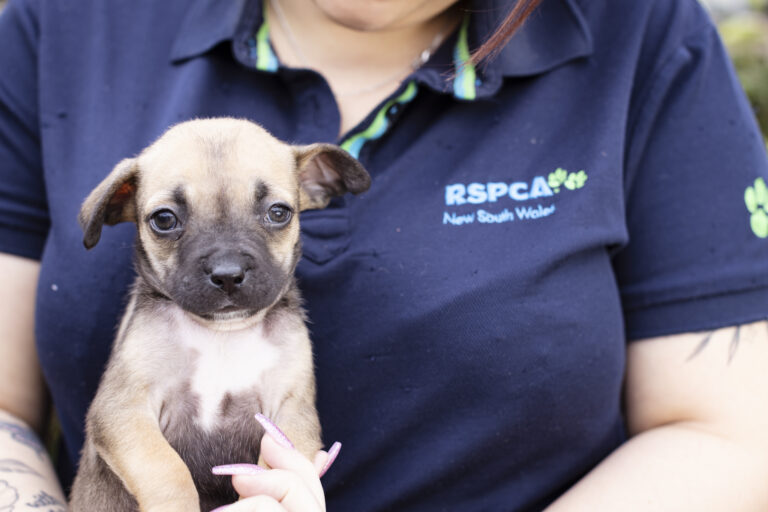
The first few months matter
The first 4 months (16 weeks) of life are important for your puppy’s mind. This is when they learn about feeling safe and building trust towards both people and other animals.
Make a safe space
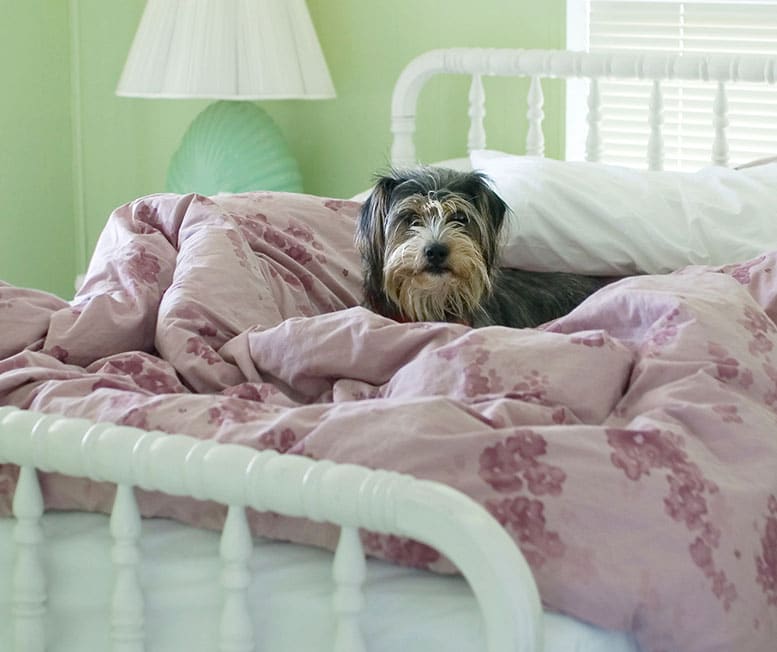
Before your puppy comes home, create a quiet place just for them with a comfy bed, their water, food, and toys. Give them things to chew, lick, sniff, and tear like KONG toys, snuffle mats, toilet rolls, and cardboard boxes. Sniffing, licking and chewing is really relaxing for dogs!
If your puppy knows it can retreat to their safe space when they feel scared, stressed, or overwhelmed, they’ll be less likely to rely on behaviours like biting or barking to feel safe. That is why it is important to let your puppy rest in their safe place whenever they want some time or space for themselves. To reinforce the idea that your puppy’s safe space is reserved for recharging and decompression, ensure you and your family don’t bother them when they are resting.
Keep a routine
Feed, play, rest, and take your puppy to the toilet at the same time each day. Puppies like to know what will happen next.
Encourage sleep
Keep in mind that puppies sleep a lot, with most resting up to 20 hours a day! Let them sleep and, instead of interrupting them, plan their day around their need to rest.
Build trust
Let your puppy come to you when they’re ready to cuddle or play. Don’t force them. Providing the puppy with a sense of choice and control makes them feel safe.
Similarly, never yell at or punish your puppy; they don’t speak the same language we do, so an aggressive tone can simply make them fearful and confused. Instead, give them treats and offer kind, positive encouragement when they do something you like. Reassurance they can understand will helps them develop good habits faster.
Go slow
Gradually exposing your puppy to calm, controlled, positive interactions with people and other friendly, calm, healthy dogs will help them feel brave and grow their confidence. Ultimately, learning experiences should occur at the pace your pup can cope with. Rushing or overwhelming your puppy can cause long-term issues.
Don’t expose your puppy to too many unfamiliar objects, people, or places at once – it can be scary and confusing for dogs to have to adapt to a range of unfamiliar sights, sounds, and smells in a short period of time.
When you familiarise your puppy slowly with new experiences, gradually broadening their horizons, your puppy will be more confident with exploring new situations and environments when they grow up.
Watch for stress or fear
It’s normal to be stressed or scared sometimes.
Signs your puppy is stressed include having wide eyes (alertness), flattened ears, licking their lips when they aren’t eating, holding up a front paw, yawning when they aren’t tired, or shaking their fur like when they are not wet.
Signs your puppy is scared include hiding, crouching, shaking, growling, licking lips, blinking fast, or tucking their tail under their back legs.
If you see any of these signs, ensure they have easy access to their dedicated safe space or if you are not at home, remove them from the situation that is making them stressed or scared. Avoid forcing your puppy into social interactions or play that they do not want to engage in. They will learn that you are looking after them, which will further build trust and strengthen the bond between you and your puppy.
Please remember that it is not normal for your puppy to feel stressed or scared most of the time. We encourage you to consult your local veterinarian or contact us for advice if you are concerned.
Give them what they need, the way they need it
Your canine companion should be able to eat without feeling fearful, threatened, or stressed. That’s why we encourage you to feed your puppy in quiet places, away from other pets.
If you have more than one dog, be sure to provide each of them with their own food, water, toys, and bed. It’s best to avoid situations where they’re forced to share or compete with one another for their basic needs. This can lead to stress and fights.
Don’t take toys or food away from your puppy – it can cause confusion and distrust or make them feel worried. If your puppy has something they shouldn’t (like your shoe or a dangerous food object), swap them for something they love.
Need help?
If you need more personalised support, RSPCA NSW is here to help. Our behaviour helpline offers guidance and advice to support you and your dog. Please reach out via our contact us form here.
Download our free Happy, Healthy Puppies guide for practical tips to help your puppy thrive.