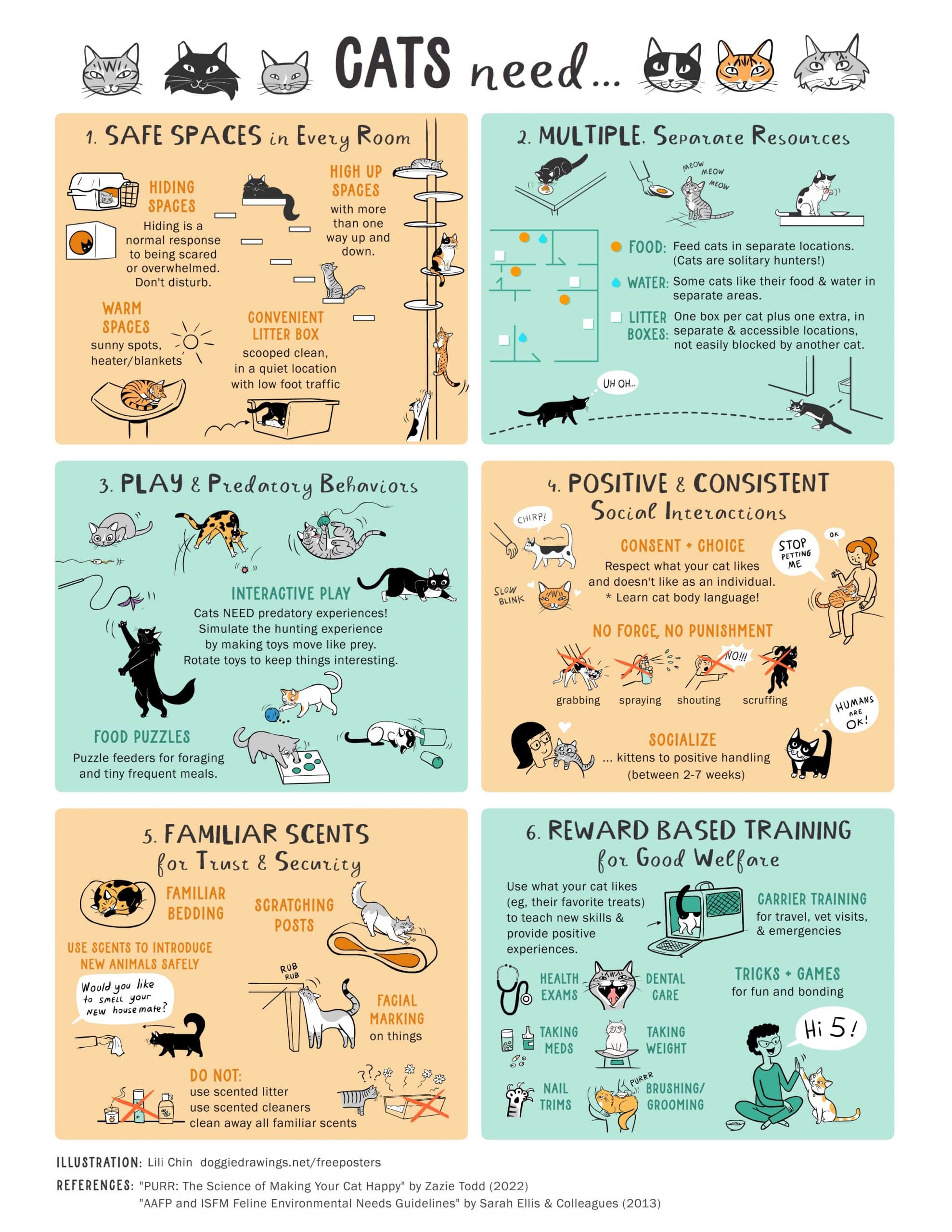
You may have seen animal carers and vets talk about the importance of cat enrichment, but what does the term actually mean? At its core, cat enrichment is about enhancing a cat’s environment in ways that go beyond their basic needs.
Once essentials like food, water, shelter and safety are met, enrichment provides additional opportunities for cats to engage with their surroundings, and experience mental and physical stimulation.
When done thoughtfully, cat enrichment plays a vital role in supporting positive welfare, emotional wellbeing, and overall quality of life.
There are five factors that contribute to a healthy feline environment, as outlined by Ellis et al (2013). These pillars form the essential foundations that must be in place for a cat to live a healthy, safe, and happy life.
Every person responsible for the care of cats has an important role to ensure these needs are met in any given environment.
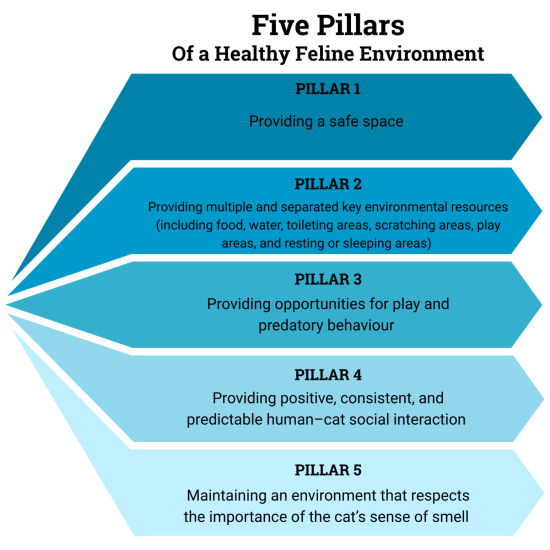
Cat enrichment builds on these essential five pillars of a healthy feline environment:
Pillar 1 – Providing a safe space
Pillar 2 – Providing multiple and separated key environmental resources (including food, water, toileting areas, scratching areas, play areas, and resting or sleeping areas)
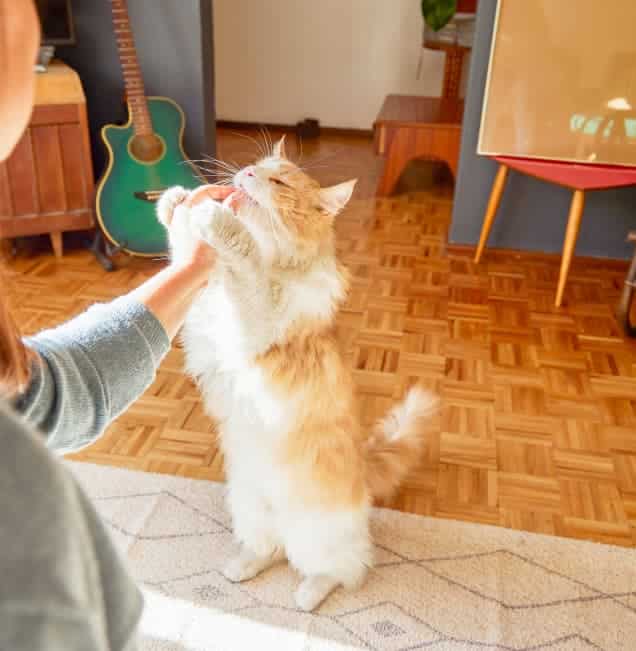
Pillar 3 – Providing opportunities for play and predatory behaviour
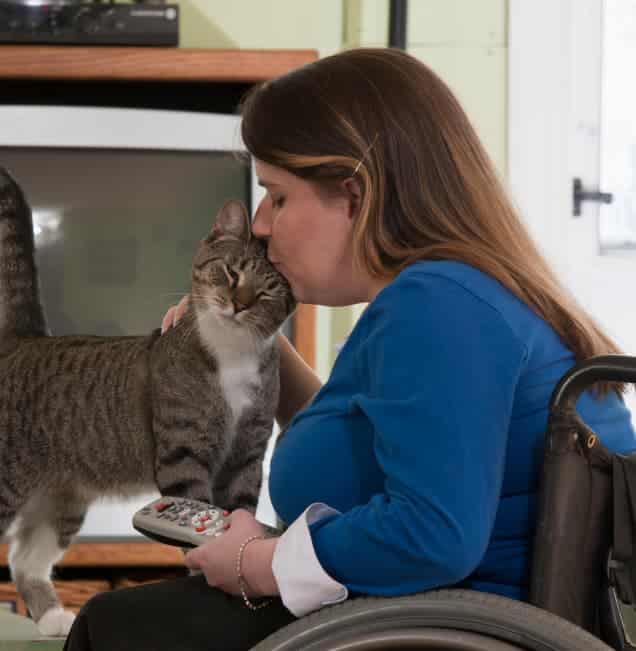
Pillar 4 – Providing positive, consistent, and predictable human–cat social interaction
Pillar 5 – Maintaining an environment that respects the importance of the cat’s sense of smell
Cat enrichment builds on these five baseline pillars by providing them with additional opportunities to express their natural behaviours and experience learning, curiosity, and engagement. Cat enrichment can be provided through any appropriate cognitive, dietary, and sensory activities that help create a more stimulating and fulfilling environment for your cat.
You can also check out some great resources for what cats need:

Cognitive Cat Enrichment: Keeping Your Cat Mentally Stimulated
Cognitive enrichment focuses on mental stimulation and problem-solving.
Just like people, cats are healthier when they can exercise both their bodies and their brains!
Cognitive enrichment encourages them to think, learn, and nurture their natural curiosity. Snuffle mats, treat balls, and homemade food puzzles are great ways to get your cat moving and their brain working. Teaching your cat fun new behaviours using positive reinforcement also provides excellent mental stimulation while strengthening your bond.
Even short training or puzzle solving sessions can help prevent boredom and keep your cat mentally sharp.
Some resources to help with cognitive cat enrichment:
Feeding and Dietary Cat Enrichment Ideas
Whoever said “don’t play with your food” was dead wrong. Cats naturally love to hunt for their food and find it really fun and rewarding!
While access to food is an essential feline need, additional feeding opportunities can be provided through enrichment that encourage your cat to express natural hunting behaviours during mealtimes. This may include placing treats or extra food in snuffle mats or puzzle feeders or scattering dry food for your cat to chase and explore. You can even create a “treasure hunt” by hiding small portions of food around the house for your cat to find. Try a few different methods to learn what your cat enjoys best.
Sensory Cat Enrichment for Sight, Smell, Sound and Touch
Sensory enrichment stimulates your cat’s senses: sight, smell, sound, taste, and touch.
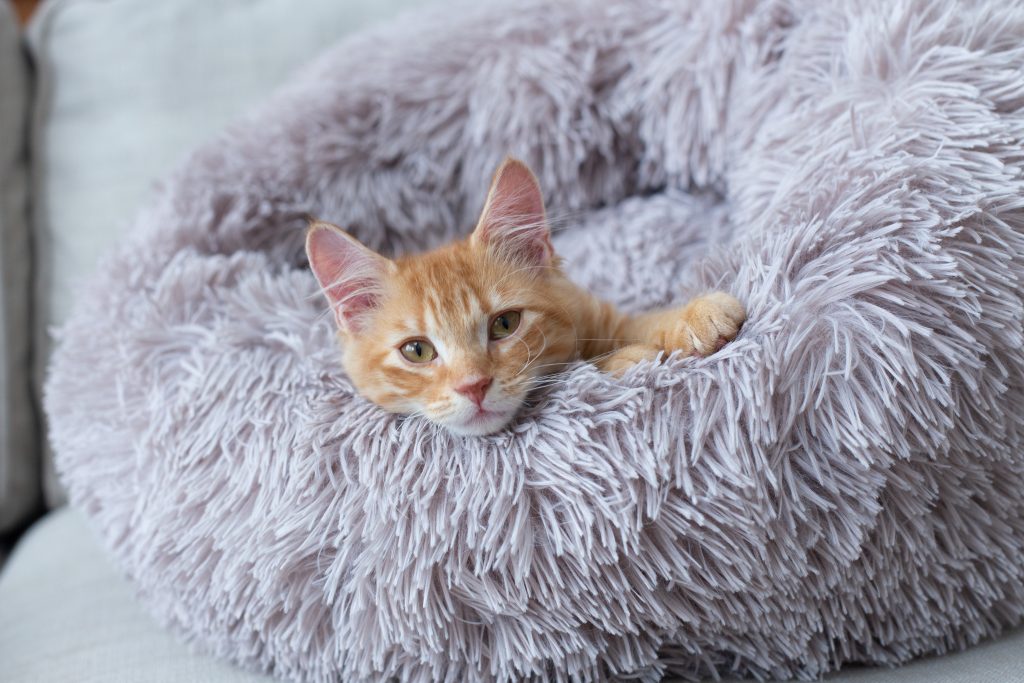
It’s no secret that cats love warmth. Try placing comfortable resting places (such as cat beds, boxes or window hammocks/perches) near sunny windows or in the cooler weather, utilise cat-safe thermal beds or heating pads to enhance a cat’s comfort within their environment.
While providing appropriate scratching posts and pads is essential for all cats, offering your cat the choice to try a variety of different textures, such as sisal rope, carpet, or cardboard, is an easy way to enrich their environment and help you learn which surfaces they love to scratch.
Secure windows and doors with cat-proof flyscreens allow cats housed indoors to safely enjoy outdoor sights, smells, and sounds.
Safe outdoor access can provide other valuable forms of sensory enrichment while still keeping your cat safe at home. It’s important to remember that safe at home doesn’t necessarily mean indoors! Attaching a secure outdoor enclosure to your house (using cat-safe netting) allows your cat to explore the outdoors while maintaining autonomy over when they enter and exit the space. This gives them the option to retreat inside whenever they choose, rather than being placed in a freestanding enclosure with no easy way to leave.
Additionally, there are other ways your cat can enjoy safe outdoor time while being kept safe at home, such as installing cat-safe fencing around your property to prevent escapes or accompanying them for supervised outdoor time! Some other fun enrichment ideas may include using toys that crinkle, jingle, or move unpredictably to add extra sensory interest to regular play. You can even plant catnip or catmint to surround your cat with scents they love. Specialised cat music is also available online and can provide calming auditory enrichment.
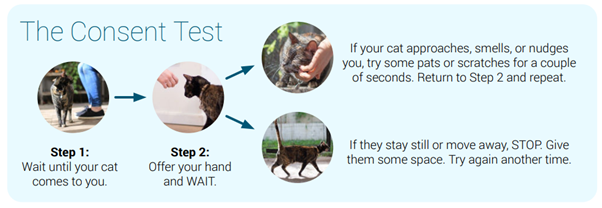
Remember, your cat should never be forced to engage in enrichment. Enrichment is designed to enhance your feline’s environment and quality of life, not to place them in situations that feel uncomfortable or overwhelming. They should always have choice and control over how they interact with enrichment. Remember, not all cats are the same, and just like us, cats have things they like or do not like. It may take some time to learn what your cat enjoys, so patience is key.
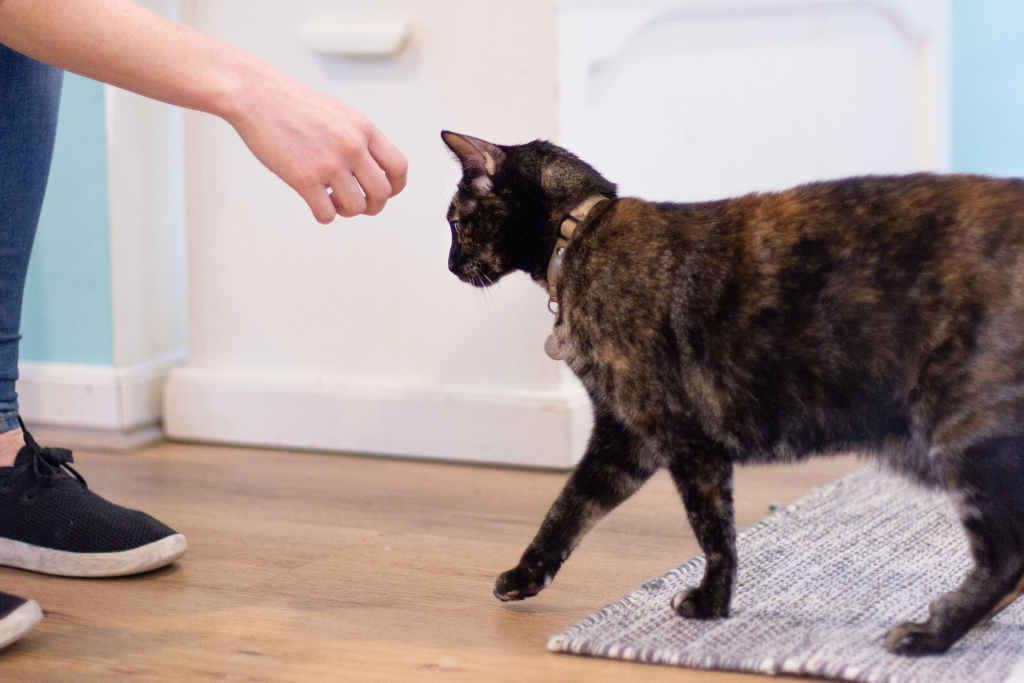
Most importantly, follow your cat’s lead. Let them initiate interactions and control how long they last. Asking for your cat’s “consent” before every interaction builds trust and helps your cat feel safe and respected.
Resources for sensory cat enrichment:
Why Play and the Prey Drive Are Essential to Cat Enrichment
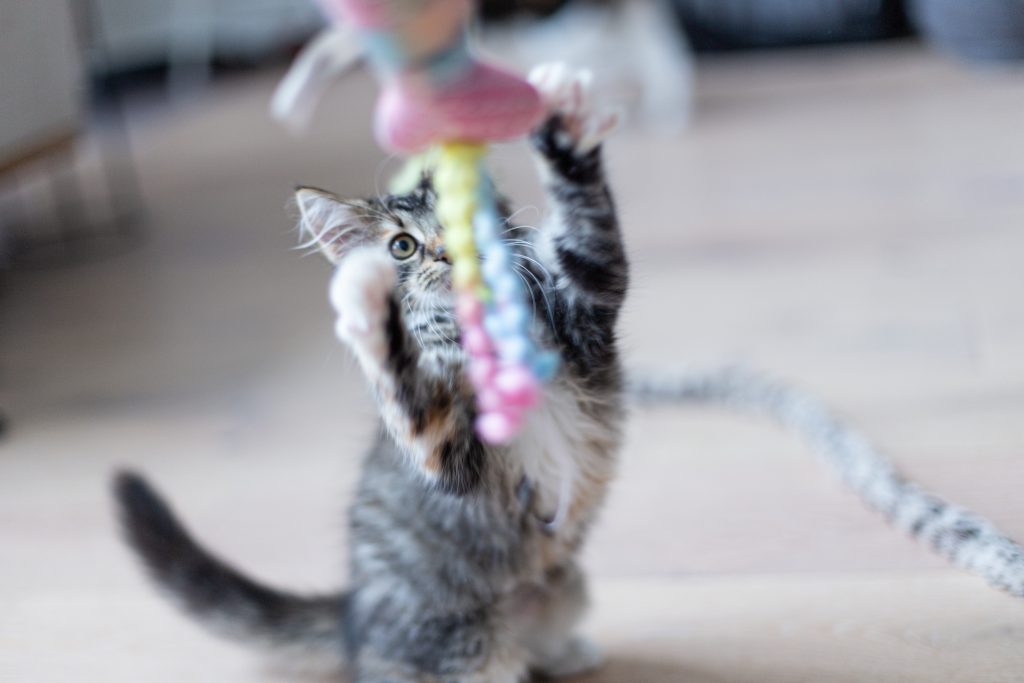
As our current understanding of a healthy feline environment shows, play is a fundamental need for cats. Just like food, water, and safe spaces, regular play is essential for a cat’s physical health, mental stimulation, and emotional wellbeing. One of the most important aspects of play is the safe activation of your cat’s natural prey drive – the instinct to notice, stalk, chase, and pounce on moving objects – while keeping them safe at home.
Understanding how to provide fun, interactive opportunities for play allows your cat to express their natural behaviours in a safe and positive way. While it may look like simple fun, play activates areas of the brain linked to motivation, reward, learning, and memory. For cats, play is closely connected to their natural prey drive, an instinct that encourages them to notice movement, focus their attention, and engage with their environment in meaningful ways.
Cats are hard wired to locate, stalk, chase, pounce, hunt, prepare, and consume prey; giving them the opportunity to complete this sequence of behaviour is critical for good emotional health throughout their life. In kittenhood, cats engage their peers to gain important social skills, but also interact with prey/objects in their environment to improve their motor skills and explore their surroundings. As cats grow, predatory behaviours are directed towards prey. For cats living safely at home, interactive play is one of the most important ways we can provide an appropriate outlet for this instinct.
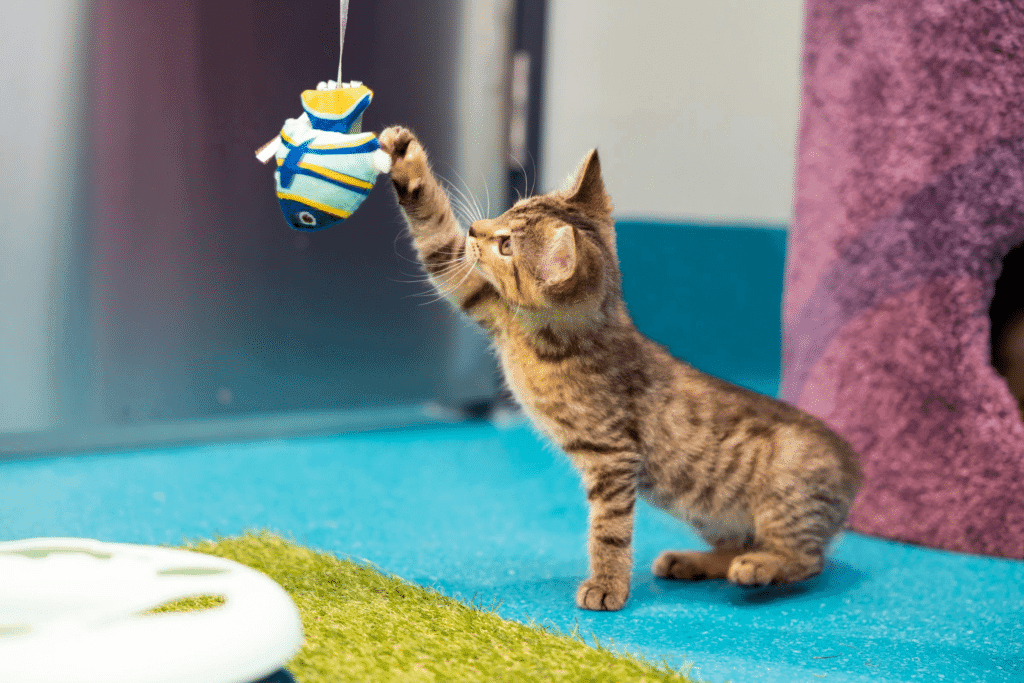
Effective play works best when it mimics the way prey behaves. Toys that move unpredictably, create gentle sounds, or disappear and reappear are especially engaging. Starting with slow, subtle movements before building intensity helps draw your cat into the game, and toys should generally move away from your cat rather than directly towards them. Short, frequent play sessions are usually more satisfying than long ones.
Allowing your cat to “catch” the toy during play is important. This prevents frustration and makes the hunting experience satisfying for your cat. Offering a small meal or treat at the end of a play session helps complete the hunting sequence and can ‘signal’ to your cat that the session is over.
Every cat is unique, meaning their interest in play may vary based on age, personality, environment, and timing. Observing, watching, or stalking a toy is still part of the play experience. If your cat seems uninterested, adjusting the toy, movement style, or play time can make a big difference.
Safe play also means avoiding common pitfalls. Laser pointers, hands, or feet should not be used as toys, as they can cause confusion or frustration. In multi-cat households, play should be offered individually whenever possible to reduce tension and allow each cat to engage comfortably.
By understanding the connection between prey drive and play, we can create enriching, safe, and satisfying experiences that support our cats’ natural behaviours, all while keeping them happy, healthy, and safe at home.
Resources for cat play:
Ellis, S. L. H., Rodan, I., Carney, H. C., Heath, S., Rochlitz, I., Shearburn, L. D., Sundahl, E., & Westropp, J. L. (2013). AAFP and ISFM feline environmental needs guidelines. Journal of Feline Medicine and Surgery, 15(3), 219–230.