Keeping Cats Safe at Home Project Update: Small Steps, Big Impact for Cats Across NSW
As the Keeping Cats Safe at Home (KCSAH) Education Officer, a huge part of my role is helping people better understand what cats need to live safe, healthy and enriched lives.
Whether it’s speaking with families at community events, visiting schools and libraries, or supporting conversations around responsible cat care, I’m constantly reminded that education can be one of the most powerful tools we have to create lasting change for cats.
Over the past month, I’ve had the opportunity to see that impact in so many different ways, from children learning how to gently interact with cats for the first time, to community members taking their first steps toward keeping their cats safe at home.
Connecting with Communities
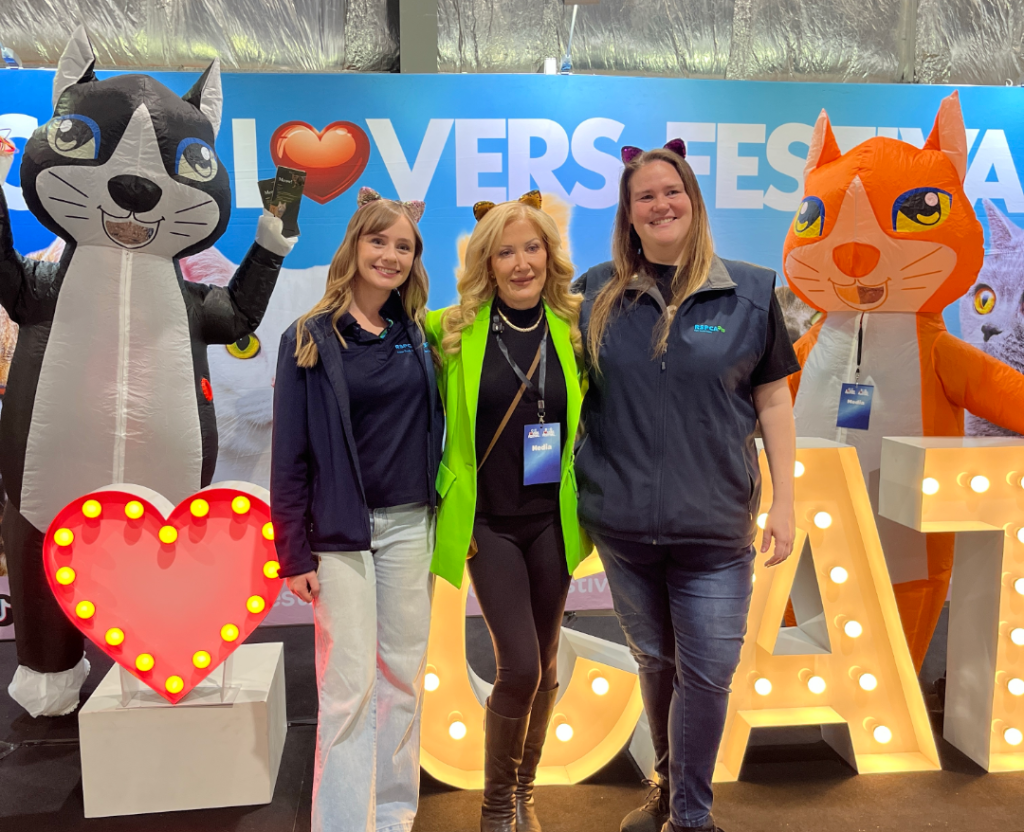
In April, the Keeping Cats Safe at Home team joined the Northern Beaches Council and Animal Welfare League for the Paws for Stores activation at Bunnings Balgowlah.
It was an excellent opportunity to speak with local cat carers about cat enclosures, desexing, and practical ways to help cats live safer lives at home. These simple conversations may seem inconsequential, but they’re often where change begins.
One particularly memorable conversation was with two aspiring foster carers preparing to welcome kittens into their home. Listening to them talk about creating a safe environment and learning everything they could before fostering was incredibly encouraging; a reminder of how many people are willing to step up and support vulnerable cats when given proper guidance.
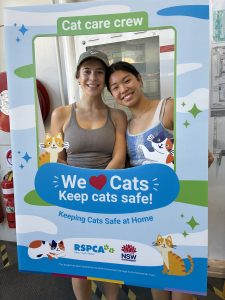
Emily and Claire – aspiring foster carers at Paws for Stores
In fact, providing this guidance via community education remained a strong focus throughout the entire month. We joined the RSPCA NSW Education team for both the Canterbury Bankstown Council’s Junior Animal Carer school holiday program, as well as animal care sessions with passionate kindergarten students from Hilltop Road Public School.
Programs like these help introduce young people to animal welfare early on, promoting safe and gentle interactions with pets while nurturing their understanding of what cats need to thrive.
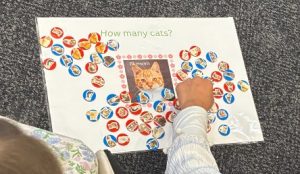
Cat counting game to educate children on the importance of desexing
Our children’s book, ‘Stay Safe Clancy,’ continues to play a huge role in those conversations. Created in collaboration with Northern Beaches Council, the book follows Clancy, an adventurous cat who learns about the dangers of roaming and the benefits of staying safe at home.
This month, ‘Stay Safe Clancy’ reached another exciting milestone after being distributed to over 100 libraries across NSW.
Behind the Scenes: Understanding Cat Populations
While community events and education are often the most visible parts of the program, there’s also a huge amount of work happening behind the scenes.
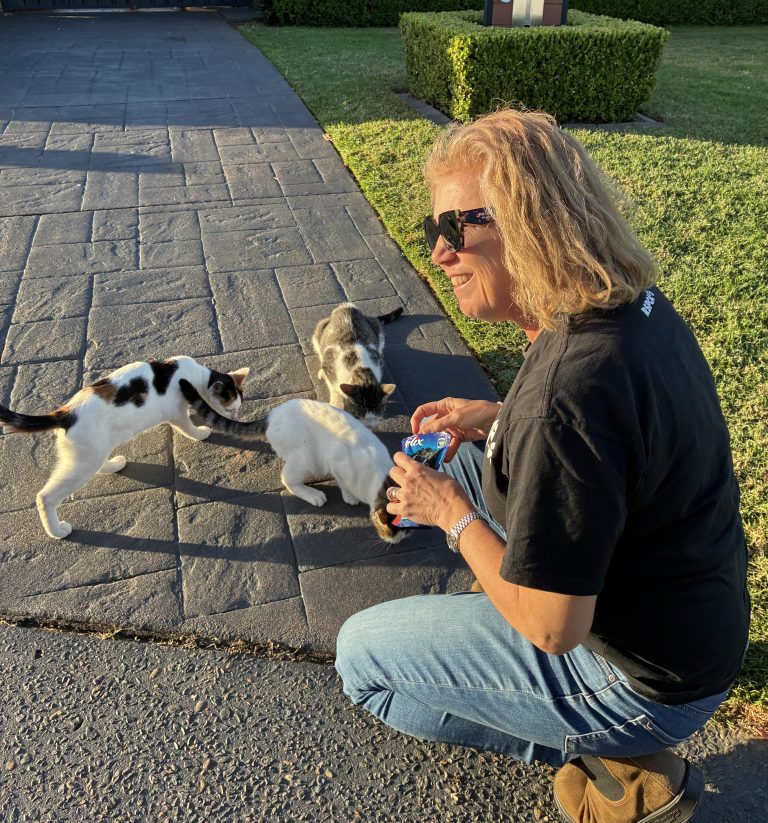
Over the past month, members of the team undertook extensive cat counting transects in both the Blue Mountains and Campbelltown areas. Across eight separate survey days, staff spent hours driving 80km monitoring routes each afternoon and evening, carefully recording sightings of free roaming cats.
These surveys are based on methodologies adapted from ecological field research and form part of our ongoing efforts to better understand cat populations and measure the impact of desexing and safe-at-home initiatives over time.
The work is time intensive, often involving long travel days in addition to the hours spent completing the transects themselves. Nevertheless, they are an incredibly important part of ensuring our program remains evidence-based and informed by real data.
At the same time, the program continues to grow at an incredible pace. Since July 2025, the Keeping Cats Safe at Home program has supported the desexing of more than 6,300 cats across NSW.
Every one of those desexed cats is a future litter prevented, reducing pressure on rescue organisations and shelters, and bringing us closer toward safer, healthier outcomes for cats and communities alike.

Keeping Cats Safe at Home Project Manager, Claudia with roaming cats during cat counting.
Supporting Carers and Cats in Need
Throughout the month, the team continued working closely with carers supporting cats in their communities through a wide range of situations.
In Fairfield, one individual has continued caring for cats they found living around an abandoned property close to their own home after receiving trapping assistance and advice from the team. Recently, they took in another five kittens and their mother to keep them safe and supported as the litter matures.
We’ve also continued supporting two residents in Earlwood who have been working hard to desex the cats they feed around their property. One of the most rewarding parts of the process has been seeing them become confident enough to safely trap the cats themselves and create recovery spaces for cats post-surgery.
These stories remind us that many people caring for community cats genuinely want to help, they just need support, education and access to services to make it possible.
Small Moments That Stay with You
One of the more interesting things our work has proven is how some of the most transformative changes come from unassuming, humble beginnings.
One particularly special interaction came during the Paws for Stores event at Bunnings Balgowlah, where we met two aspiring foster carers preparing their home for kittens. They spoke about researching enrichment, safe spaces and how to gradually settle nervous kittens into a new environment.
It was such a positive reminder that creating safe-at-home lifestyles for cats doesn’t always start with a huge change. Sometimes it starts with someone deciding to learn more, ask questions and make their home a little safer for the animals in their care.
Those quieter moments may not always show up in statistics, but they are a huge part of how long-term change happens for cats across NSW.
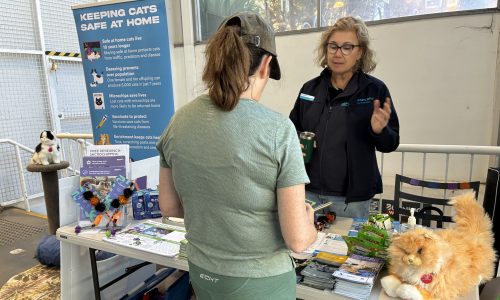
Claudia providing education at Paws for Stores
A Reminder About Vaccination!
This month has also reminded us of how critical preventative healthcare and vaccination are for cats.
We are currently seeing an increase in cases of feline panleukopenia virus (FPV), otherwise known as feline parvovirus, particularly in the following parts of NSW: Panania, Lidcombe, Ingleburn, Auburn, Regents Park, Old Guildford, and Guildford.
FPV is a highly contagious and potentially life-threatening virus that affects cats, particularly kittens and unvaccinated cats.
Common signs of infection include low energy, loss of appetite, vomiting, fever, and diarrhoea, which can sometimes become suddenly severe or bloody. Because symptoms can worsen quickly, early veterinary treatment is extremely important.
One of the biggest challenges with FPV is how easily it spreads. The virus can be transmitted through contact with infected cats, as well as contaminated bedding, litter trays, food bowls, clothing, and even contaminated surfaces. Cats can even spread the virus before they begin showing signs of illness, which is why outbreaks can escalate so rapidly in shelters, rescue environments, and community cat populations.
Vaccination remains one of the most effective ways to protect cats from FPV. Adult cats who are up to date with their vaccinations are at minimal risk, while kittens are especially vulnerable, with mortality rates in young kittens unfortunately remaining very high.
For anyone caring for cats or kittens, particularly foster carers, colony carers, or people introducing a new cat into their home, ensuring vaccinations are current is incredibly important. Providing new cats with a quiet space to settle in, monitoring them closely for signs of illness and seeking veterinary advice early if concerns arise can help protect both them and other animals in the household.
You can learn more about feline panleukopenia, including symptoms, prevention and vaccination, in our latest blog.
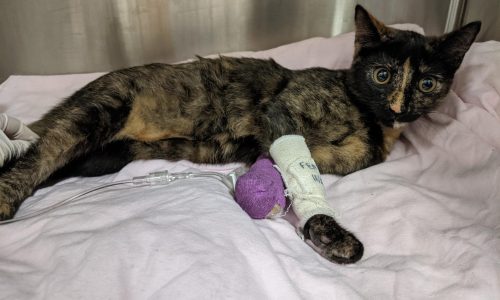
Cat receiving veterinary treatment
Looking Ahead
It’s been amazing to watch how many different ways people work to improve the lives of cats.
From councils and educators to foster carers, researchers, and community members, every one of their conversations, desexing appointments, and thoughtful acts of care helps build safer futures for cats across NSW.
While the work is often busy and sometimes challenging, moments like seeing a child gently interact with a cat for the first time, watching a nervous carer gain confidence, or helping kittens move into safety remind us exactly why this work matters.
Carolyn
Education Officer
Keeping Cats Safe at Home RSPCA NSW